
July 2026 - Director's Corner
By Melissa Mahoney, July 6, 2026
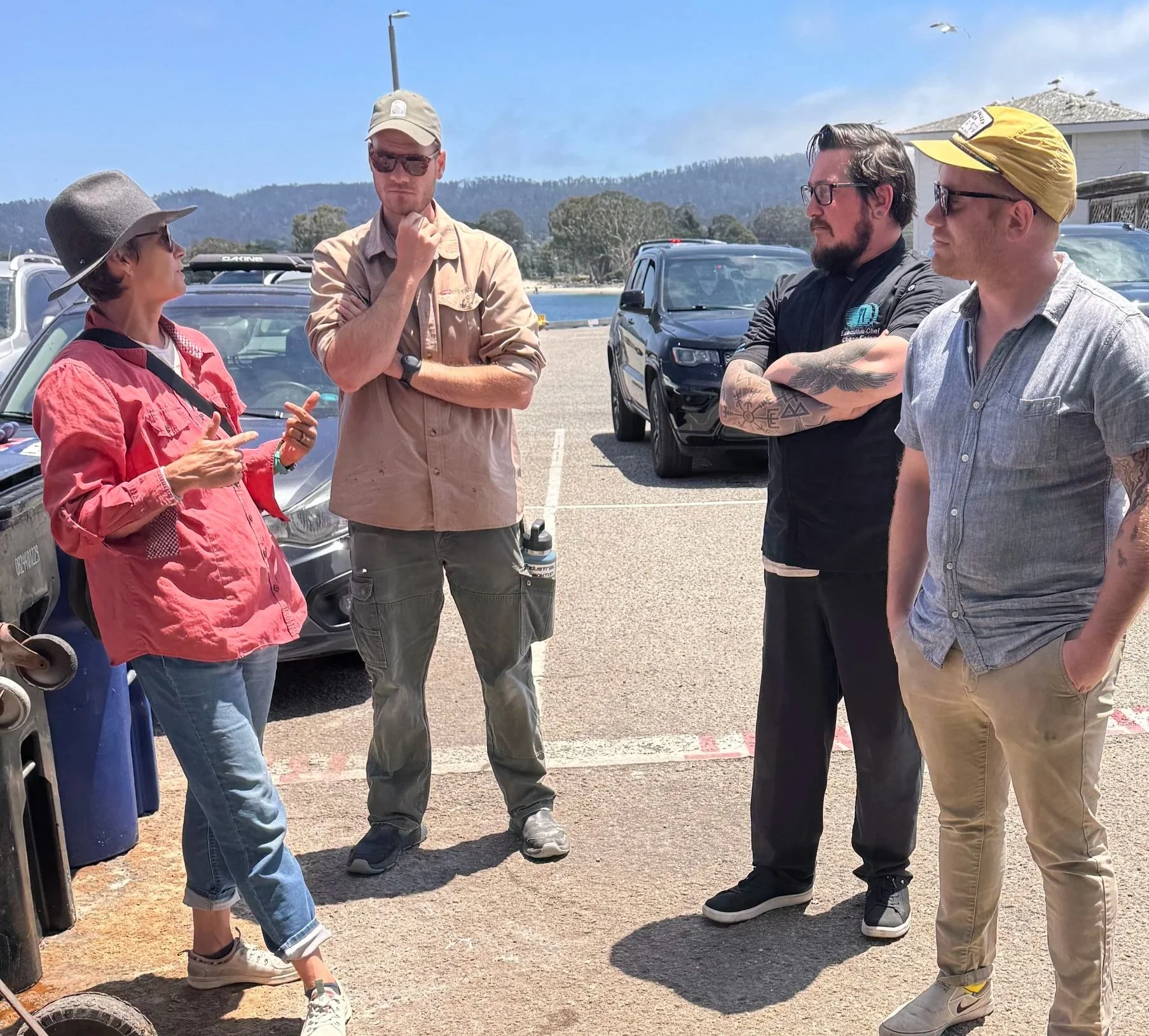
One sunny afternoon in June, a small group of seafood enthusiasts gathered outside Monterey Abalone Company at the end of Wharf II for the chance to try something a little out of the ordinary: purple sea urchin uni, straight from the shell.
The tasting was organized by Dan Jenkin of Real Good Fish, who had a simple goal—to get Chef Chase Ewing of Meals on Wheels of the Monterey Peninsula (MOWMP) to experience the bright orange, salty-sweet delicacy firsthand. If Chase liked it and enough quality uni could be produced, perhaps it could make its way onto the menu for our upcoming Get Hooked dinner. And after that, plenty more local chefs would be interested as well.
While this moment may seem like a small experiment, it represents a much bigger idea.
For years, exploding populations of purple sea urchins have overgrazed California's kelp forests, leaving behind vast underwater "urchin barrens" where little else can survive. At the same time, our local seafood economy continues to search for new opportunities to create jobs, diversify income, and make better use of our marine resources.
What if one solution could help address both challenges?
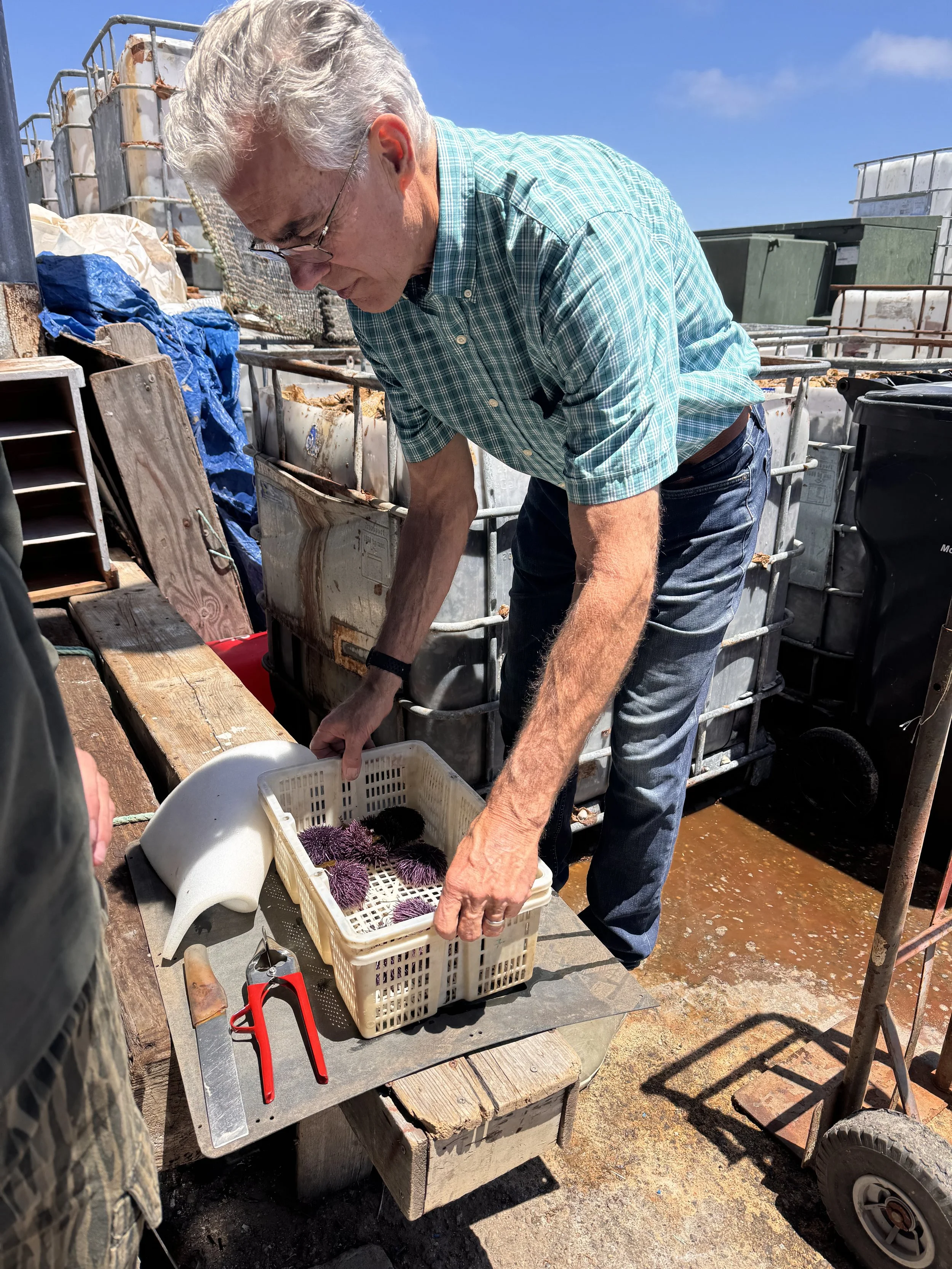
That's exactly what Art Seavey, owner of Monterey Abalone Company, is working to find out. Along with researchers at the Moss Landing Marine Laboratories (MLML), Art is experimenting with collecting purple urchins from the wild— often empty and commercially worthless because they have little or no roe—and growing them in captivity. By feeding them kelp and other specially formulated diets, the team hopes to "finish" the urchins, producing high-quality uni that can be sold into the local seafood market.
If successful, the concept could create demand for removing purple urchins from degraded kelp forests while transforming an ecological problem into a valuable local seafood product.
It's not simple work. Harvesting, transporting, housing, and feeding thousands of urchins requires specialized facilities, careful husbandry, and plenty of experimentation. But if anyone can figure it out, it's Art and MLML collaborators, who have spent decades pushing the boundaries of aquaculture innovation.
I have to admit, I approached the tasting with a healthy dose of skepticism. Eating bright orange roe scooped directly from a sea urchin wasn't exactly in my comfort zone. But after the first bite, I understood the appeal. The uni was rich, sweet, and briny all at once—a taste that captured the essence of the ocean. It's easy to see why it's considered such a delicacy in cultures where seafood plays a central role in the cuisine.
The tasting turned out to be a success. Chef Chase loved it, curious passersby stopped to ask for samples, and before long, an agreement was in place to feature local purple urchin uni at the sold-out Get Hooked dinner, benefiting both Monterey Bay Fisheries Trust and Meals on Wheels of the Monterey Peninsula.
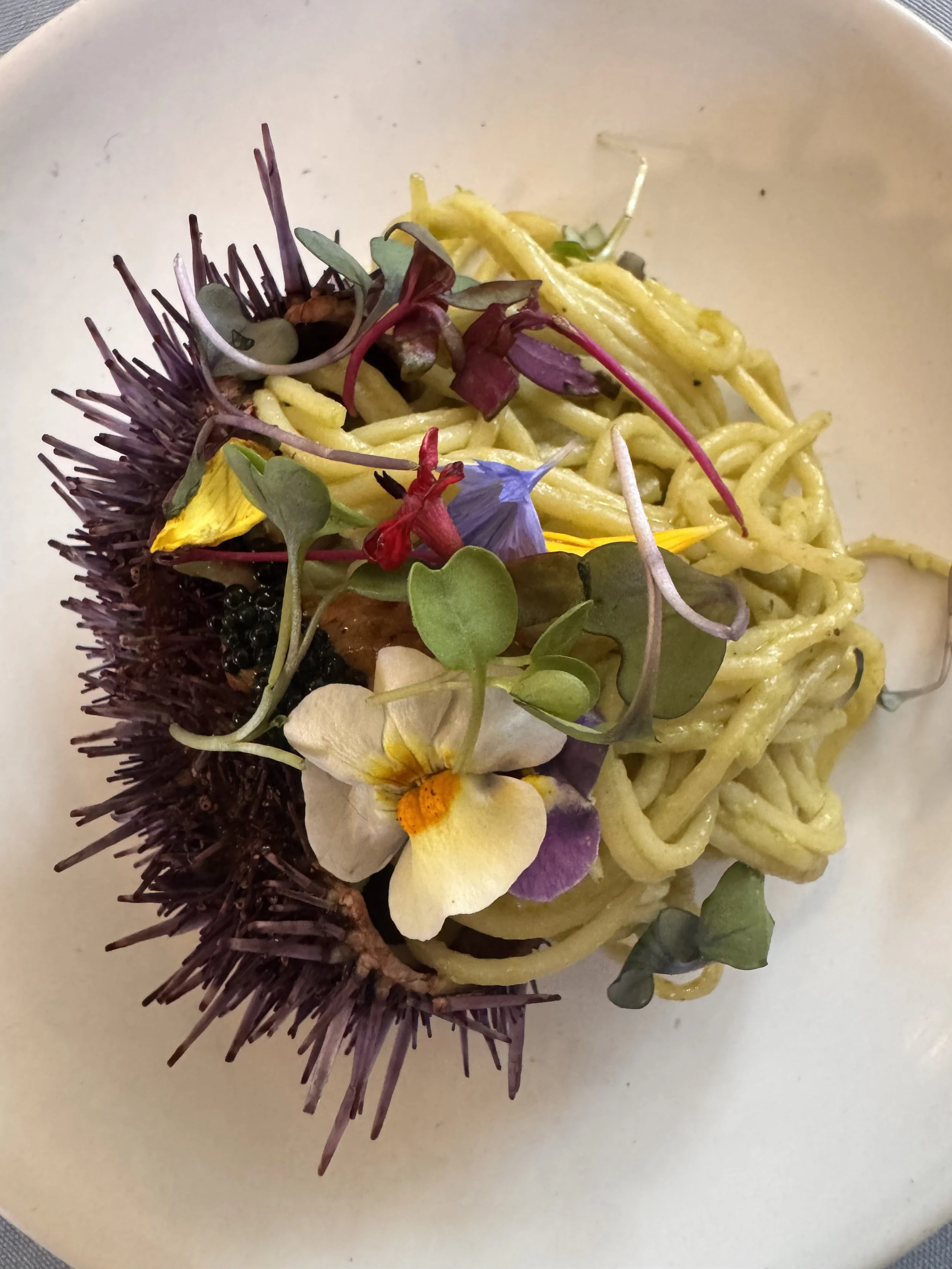
Moments like these remind me that innovation often starts with a handful of people willing to test an idea. Bringing together fishermen, scientists, aquaculture experts, chefs, and community partners won't solve our biggest challenges overnight. But every successful collaboration moves us one step closer.
Sometimes restoring kelp forests and strengthening our seafood economy begins with something as simple as gathering, opening a few sea urchins, and asking, "What if?"
