
Three Chefs who LOVE the Freshness of Local Fish from Ocean2Table
By Mark Anderson, February 9, 2026
Ian Cole doesn’t think long at all when asked when he feels most alive in his job.
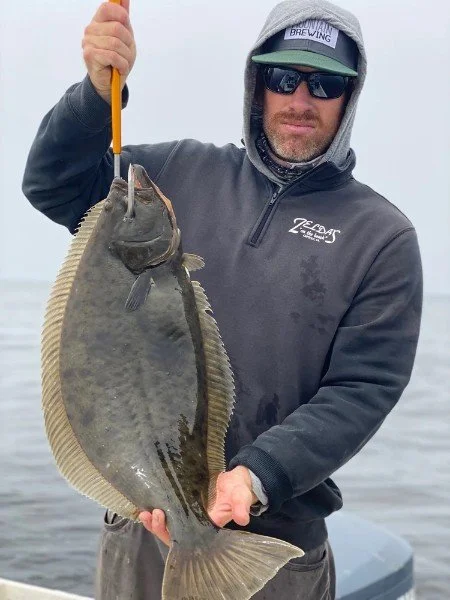
“Definitely in the field,” he says. “Commercial fishing, working in the orchard, or mushroom foraging.”
Cole, who directs the Ocean2Table food hub on the West side of Santa Cruz, identifies a current running through those experiences, beyond communion with nature.
“Talking to other fishermen and foragers, hearing from and talking to one another—‘What’s happening with the weather?’ ‘Where’s the bait?’ ‘How’s the moisture?’—makes me feel connected to the resource itself, and gets me the most excited… it always has.”
He hastens to add other interactions that additionally stoke his fire: Meeting with both nonprofit food relief programs and area chefs.
“Dropping off fish, meeting clients at Pajaro Loaves and Fishes, and operating with chefs who are really committed to things we are,” he says, “makes it easy to feed off their excitement.”
The latter category, chefs Cole describes as “people operating at the highest level of culinary achievement,” helped inspire Monterey Bay Fisheries Trust to seek out three partner kitchens.
The idea therein: Spotlight what they’re doing with Ocean2Table catch and borrow some lessons for seafood-loving home cooks at the same time.
Spoiler alert/serendipity alert: Two of those restaurants host the next two Get Hooked! Dinners to benefit MBFT’s Community Seafood Program.
•••
Chef #1 • Santos Majano • Hook + Line, Santa Cruz
Majano, who directs things at the #1-ranked spot in Edible Monterey Bay’s Best Monterey Bay Restaurants for 2024, hosts the next Get Hooked! dinner Feb. 24 at 6pm.
Another game-changing community-supported fishery—who also supplies H+L—will participate, with pioneering entrepreneur Alan Lovewell, co-founder of Real Good Fish, speaking and fielding questions from guests with his wife, Jenn Lovewell (formerly nutrition director for Monterey County School District), who now helps run the business.
Back at H+L, Majano describes his recipe for roasted rock fish with on-brand enthusiasm.
“This dish is all about bold flavor—bright citrus, fresh herbs, and vibrant local ingredients make a lively and fresh dish,” he says. “What truly makes it a win every time is the local and sustainable seafood I get from these providers is always incredibly fresh and delicious.”
The nice thing about assembling it without, say, Majano’s skill set, he notes, is precisely that great sourcing.
“It is perfect to recreate at home because the magic isn’t in fancy techniques,” he says. “It’s in top-quality ingredients, confident seasoning, and letting that ultra-fresh fish shine.”
Get his full recipe below.
Chef #2 • Michael Chang • Foray, Carmel-by-the-Sea
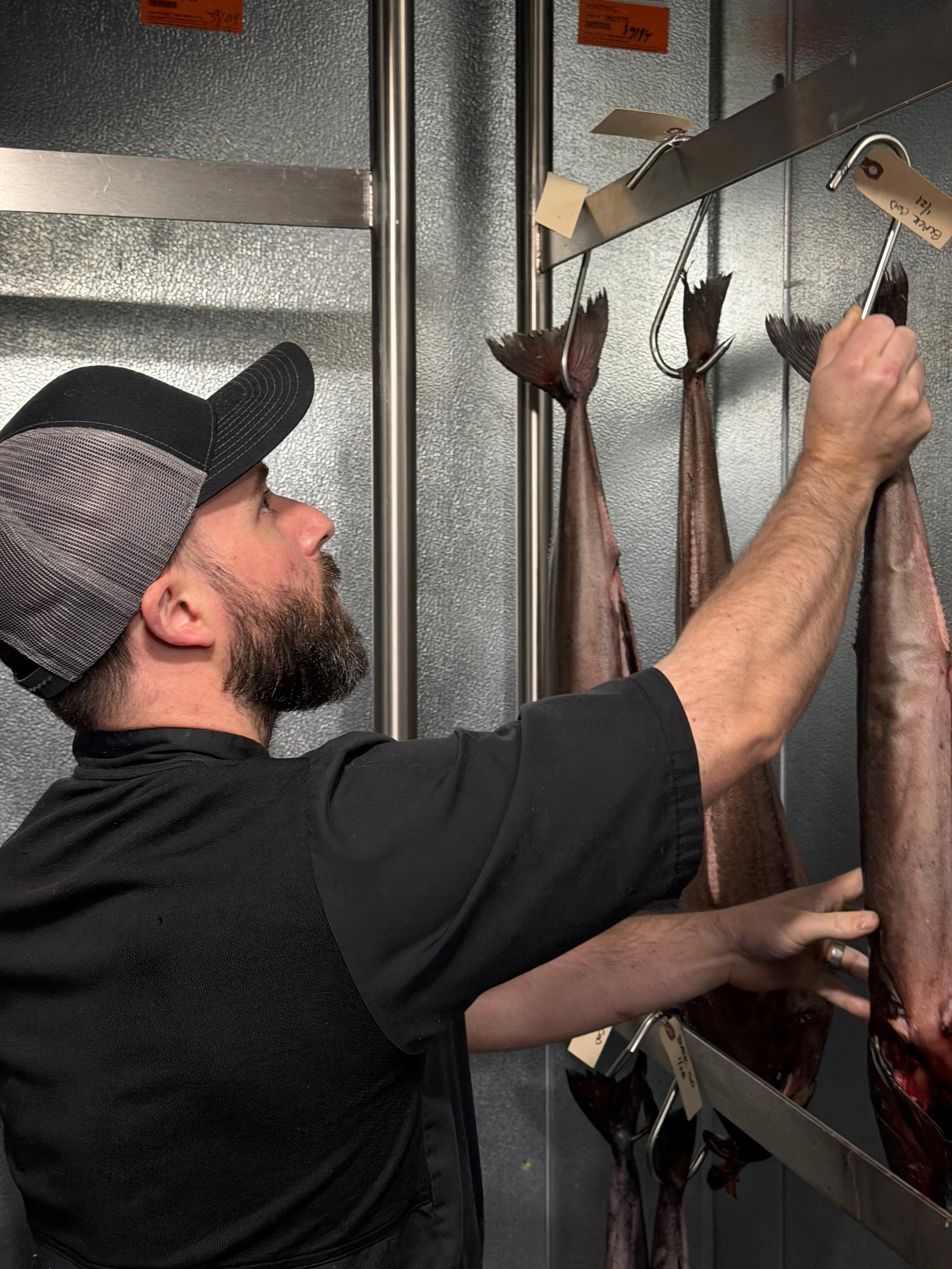
Simply scanning Chang’s recipe for Ocean2Table black cod presents a culinary education—and a window into the supreme execution he applies to hyper-fresh product, as Cole observes.
“[Chang] built that whole kitchen custom,” Cole says, “and had a vision of what he’d be serving, the whole time.”
That kitchen includes a gleaming dry aging refrigerator, where he rests Monterey Bay cod, aka sablefish or butterfish, for a full two weeks.
Then he serves it with radish cake, shiro dashi-yuzu sauce, house-cured black cod bottarga (cured, dried, and salted fish roe), and binchotan roasted turnips and gai lan (Chinese broccoli fired over clean-burning Japanese coal).
Keeping with their hands-on operating philosophy, Foray makes their own shiro dashi, which takes hours and requires multiple ingredients.
Chang encourages home cooks to focus on less-time-consuming tasks.
“You can skip all of that and buy off-the-shelf shiro dashi at your neighborhood Asian supermarket,” adding, “while you’re there, buy agar, too, as you’ll need it later!”
Aging your own fish at home would be a little extra, requiring a dedicated dry-aging fridge to maintain consistent temperature and humidity (though he observes Ocean2Table is experimenting with offering dry-aged fish themselves).
But there are other, more doable elements to his prep, namely the pan-stable glaze—meaning a sauce that won’t break, crystalize or lose its glossiness when added to a hot pan—no sugar needed.
Here’s how to proceed from there:
Start by reducing the shiro dashi—a standard 500ml bottle would work, and we can base this recipe on that—by 1/3 (335ml).
Let it cool for 10 minutes, then whisk in a 1/4 teaspoon of agar, which stabilizes and thickens, and bring it back to a simmer while continuing to whisk for 3 minutes.
Next, add 1 teaspoon cornstarch slurry, which is just 50% water and 50% cornstarch, and whisk for 1 minute to combine.
Lastly, whisk in a few drops of neutral oil off the heat and fully cool. To use, sear the fish skin side down, flip and add the glaze, then baste until it fully coats the fish to the desired consistency.
As a bonus, you can use these ratios to turn almost any liquid into a pan-stable glaze without unnecessary added sugar!
Another bonus, Foray and Chang will host MBFT’s upcoming Get Hooked! Dinner on March 19 in Carmel, to support the nonprofit’s Community Seafood Program.
Cole will be in attendance to talk big-picture progress done by way of small and direct interactions—while grateful to contribute to the anti-hunger, pro-protein, pro-local fishermen program the dinners support.
“With California food, everything we produce is expensive, so it’s always been a mission to get fish to people at each end of the economic spectrum,” he says. “When competing against subsidized chicken and beef, or imported tilapia, paying $15/pound for local fish is hard. So being able to work with MBFT to gather funds—and to work with captains to find a fish that can work for organizations extending accessibility to the food insecure—is a plus, and creates meaning for what we’re doing.”
Chef #3 • Quinton Nuquist • Esalen Institute, Big Sur
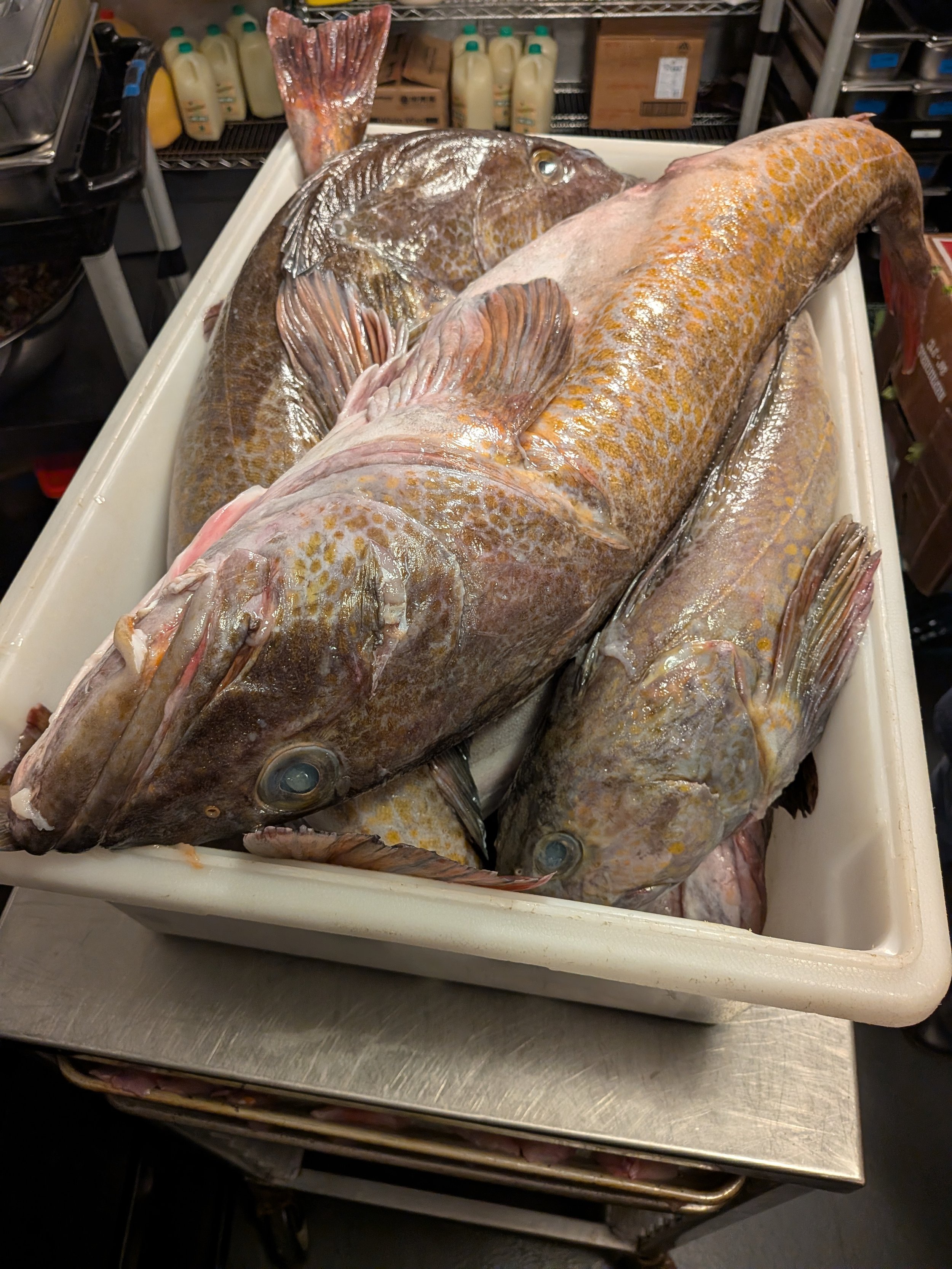
Given the workshops that changed the arc of human history, OMG-level garden-lawn-cliff complex, and the legendary natural hot springs at Esalen, maybe it makes sense that its kitchen program doesn’t necessarily get the shine it deserves.
And it also makes sense to give it greater celebration, as it channels real joy from the likes of executive sous chef Quinton Nurquist, who’s also a recreational fisherman.
“I love what I do,” Nuquist says. “Cooking for others is the greatest form of service to me and I love every bit of it—[including] being able to talk directly with the vendors and, in the case of Ocean2Table, work directly with Ian to cook with the freshest fish I have ever worked with that I didn’t catch myself.”
For the purposes of this piece, he furnished a guide to Esalen’s “sweet heat poaching sauce” which stands out for its simplicity and intensity.
The easy formula, per Nuquist, scales to how much you want to pour over your catch, with equal parts sugar, water, rice vinegar, a spoonful (or more) of gochujang and chili flakes to desired heat level, fresh chopped mint and cilantro, with lime juice and fish sauce “to add that extra little funky salty goodness.”
“Best spooned over the top of some fresh local black cod filets and steamed to perfection,” he says. “The moisture from the steam mixes with the sauce and creates a mix that goes beautifully over some fresh rice and a mix of steamed veggies or a refreshing mango slaw.”
He notes this preparation is a favorite among staff and guests at Esalen, the centerpiece of their Thai dinner nights.
“Everyone is always impressed by the quality of the [catch], and people often stop and stare into our open kitchen to watch us process these fantastic fish,” Nuquist says.”We are always proud to tell diners how local our fish is!”
For help sourcing local Monterey Bay seafood from wholesalers and restaurants alike, check out our Local Catch Guide and find the freshest fish around.
Editor’s note: Portions of this piece previously appeared via Edible Monterey Bay, where MBFT contributor Mark C. Anderson is a columnist and managing editor. EMB’s popular e-newsletter is available free.