
Salmon Season Is Back; Let's Not Get Too Carried Away • 2026 Season Update
By Mark C Anderson, May 4, 2026
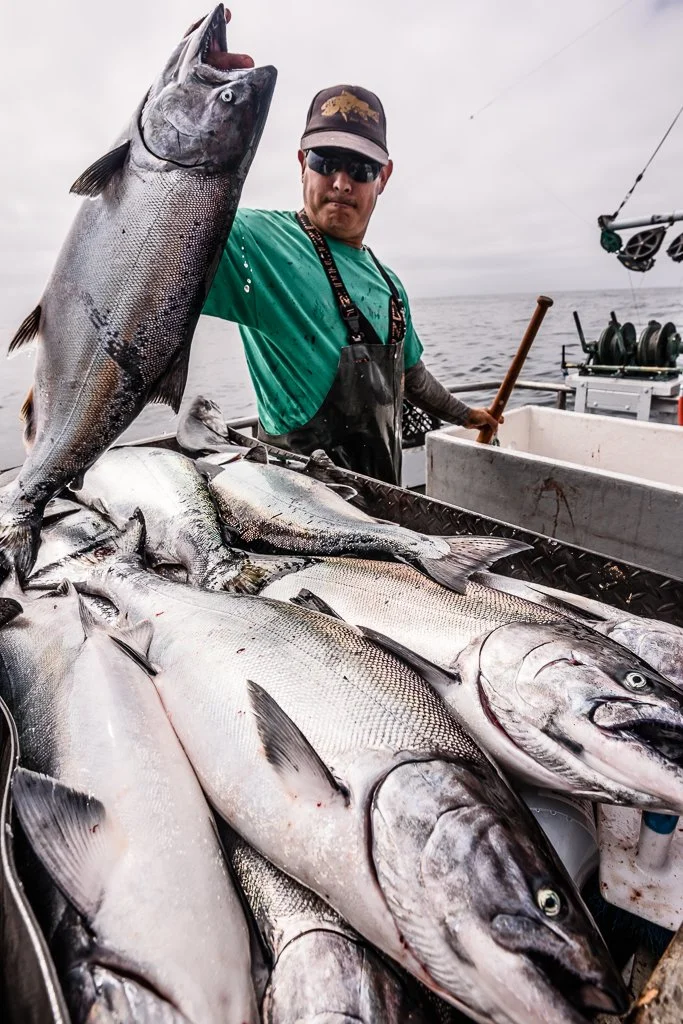
Salmon fishermen and fishery experts are finding it hard to sleep, for very different reasons.
On his boat in the Moss Landing Harbor, Mike Burns was tossing and turning last week because he couldn’t wait to get on the water for the first salmon season in three years, which started in short spurts on Friday, May 1.
“I’m really wired,” he says. “It will be difficult to sleep the last few nights before the season.”
Near the Santa Rosa, California, headquarters for the Golden State Salmon Association (GSSA), Executive Director Vance Staplin is losing sleep over what he views as a misrepresentation of salmon reality.
“There’s been a lot of ‘Woo hoo! The salmon season is back!’” Staplin says. “The state has been putting a bright, rosy outlook on it. But the problem hasn’t been solved. The fishery hasn’t recovered.”
In that collective restlessness lies the most helpful truth of the first commercial salmon season since 2023: It represents progress, but floats a long, long way from anything approaching perfection.
•••
Tuk Su Yi has been one of the captains leading recreational salmon charters in advance of the commercial opener, on the F/V Papa Son out of Moss Landing, and with Barbarossa Fishing out of Santa Cruz. (He also might be the only one practicing ikejime, the humane slaughtering technique that kills the fish instantly and prevents the release of stress hormones.)
It’s been a lot of fun, without a lot of fish.
“Definitely, people are excited for the season,” he says, noting clients have traveled from as far as Los Angeles. “It’s been a very slow bite, nothing like the full speed fishing in April we’re used to. All you can do is keep fishing and keep trying.”
Marina resident and avid sport angler Pat Kuhl joined one of those trips in April. He acknowledges the fish were minimal—and were swimming super deep, up to 300+ feet below the surface.
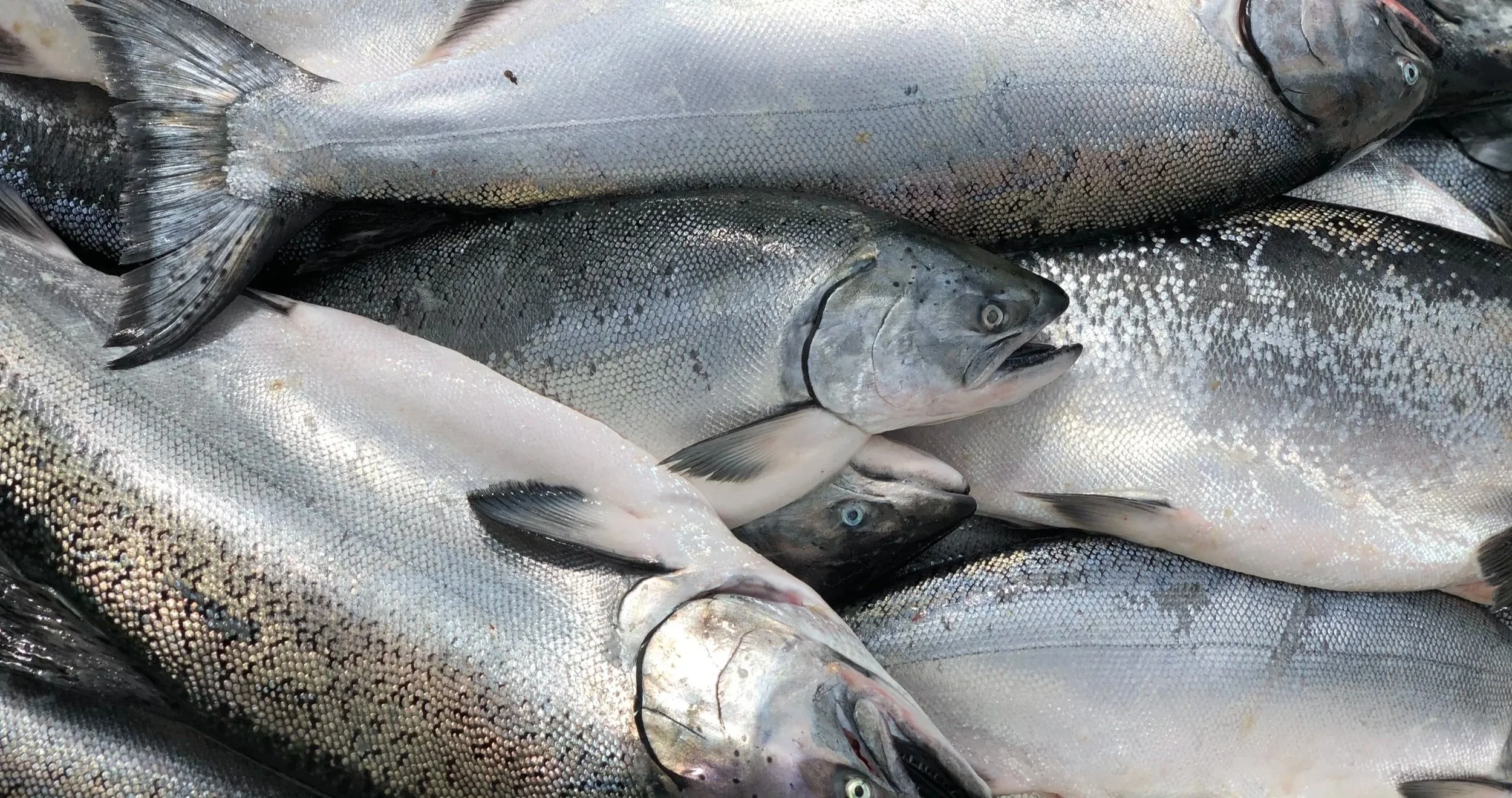
He also sounds euphoric at the gourmet variability in the catch, noting how a 3-year-old salmon’s anchovy diet leads to super fatty flesh, and year-two salmon snacking on krill produces leaner, brighter red meat as a result.
“[Landing] fish from multiple year-classes is a positive sign for the future,” Kuhl says. “And eating it was amazing.”
•••
Veteran fisherwoman and industry leader Sarah Bates is as comfortable rallying for river-smart lawmaking on the steps of the state capitol as she is speaking articulately about fishery policy.
But she’s happier on the ocean.
“It’s nice to remember fishing for salmon is really fun!” she says. “This is a job, but most of us enjoy it.”
She’s familiar with balancing that joy and the big picture.
“It is possible to hold two contradictory ideas at once: I’m excited to go fishing—and tying up leaders now!—and my family hasn’t eaten salmon in three years, [as] we’ve deferred maintenance, and been tied up at port,” she says. “It is great to have a little something. At the same time, it’s not enough.”
The eagerness is audible in her voice—“It doesn’t matter how many times you’ve done it, it’s fun to have a fish on the end of the string,” she says—which comes with reverence for a special creature.
“People have been catching salmon since there were people here, and salmon are also just an incredible species,” she says. “It’s also really delicious and really healthy, which is part of why it feels great to bring it to your family and your port and your community.”
She pauses, then adds more context.
“It’s a really important part of the local ecosystem and economy, one of the lowest carbon footprint proteins, and a real—and rare—wild food,” she says. “I don’t mean to be too evangelical about it, but it is one of the more perfect foods we have.”
For Staplin at GSSA, the priority to perpetuate that sort of perfection involves cautious optimism, and relentless advocacy—including the “Three Hs” of habitat, hatcheries and hydrology.
“We don’t want to take our hand off the throttle of progress,” he says. “What we need to do is focus on protections back in the river delta and better resources for the health of salmon, while remembering it’s incredibly important to let the public know where we are.”
Looking at the details of the 2026 commercial fishery south of Point Arena, hard limits look like:
83,000 Chinook (king salmon) harvest limit
160 salmon landing/possession limit per vessel per open period
27-inch minimum size.
Open periods—which will be concluded if catch limits are reached—are specific to the coastal region (see map).
Caption: Management zones used by federal and state managers (CDFW Regulations page).
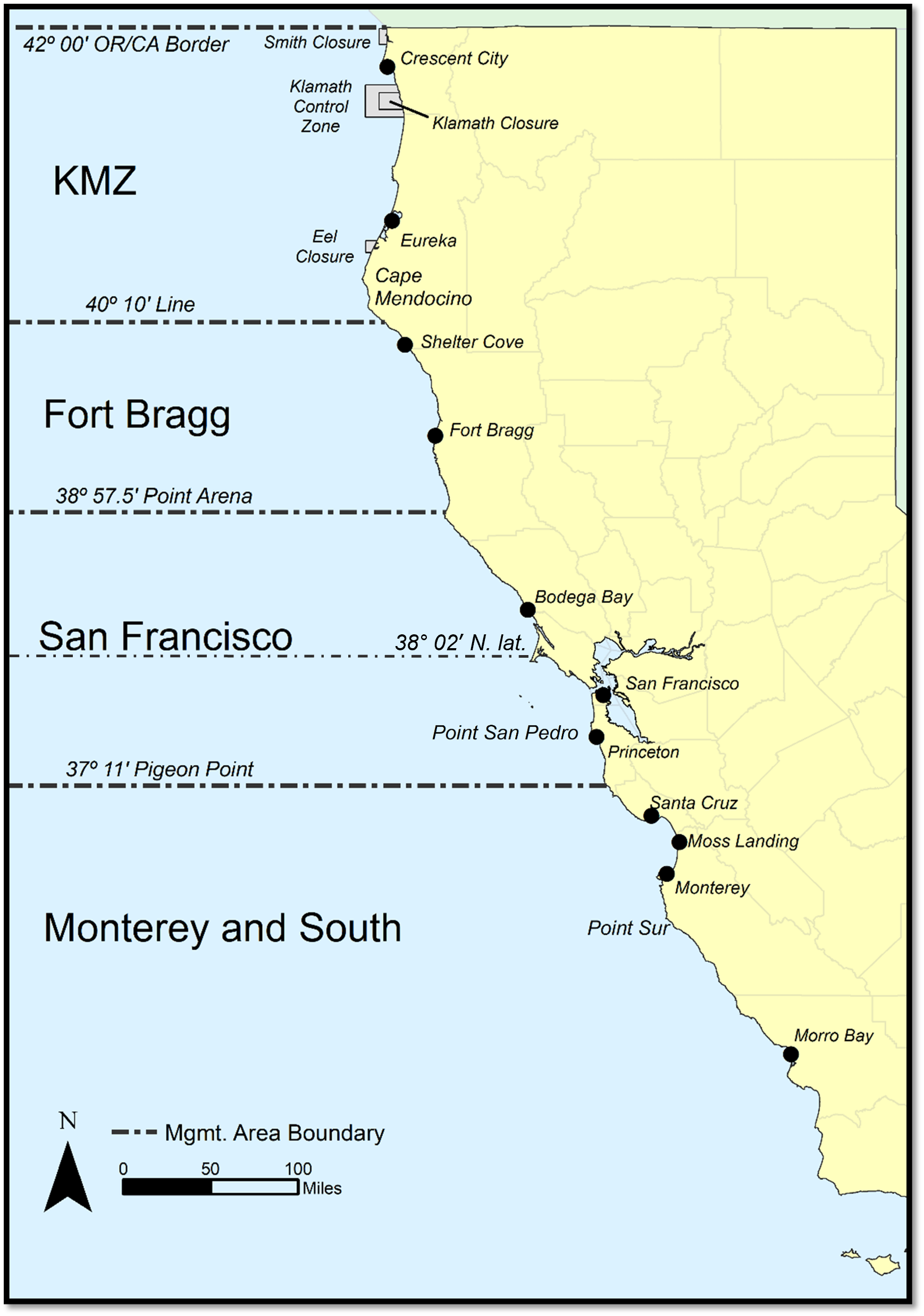
For Point Arena to Pigeon Point they run May 1–6, May 9–13, May 16–20, May 23–29, Aug. 1–7, Aug. 13–16, Aug. 25–27; for the Monterey Region (Pigeon Point south) they additionally include June 3–8, June 12–16, June 26–30, July 6–10, July 20–24.
Fall harvest season has a 20,000 fish limit, 100 fish per vessel per open period, and a 26-inch minimum size. If limits are reached early, CDFW can close the fishery with short notice. .
“We’re looking at 100,000 [salmon] for the entire commercial fleet for a whole season,” Bates says. “We’re excited to get a little bit, but it’s not enough.”
Staplin agrees.
“I don’t want to be a downer, but I cringe when I see these stories and people are doing a big dance,” he says. “It’s wonderful that we’re fishing, but the fishery is far from wonderful.”
•••
No matter how he sleeps, Mike Burns will be hyped to wake up and get to go salmon fishing —“It’s just great fun to be on the ocean working”—but he’s realistic about how things will proceed.
“It could be a really short season if the fleet finds the fish,” he says. “If the fish are scattered it could be a slow grind, but it’s still fishing.”
He ticks off what the fishing community has learned—or at least argued about—from taking greater hauls, the effects of varying river flows and how much is hard to predict.
“Salmon has always been tenuous,” he says. “That’s the realism part of me. The rest of me just wants to catch fish.”
For those of us on land and excited about getting our hands on some of this fresh local catch, the search may have to be tenacious.
If the bite is strong, there will be plenty to go around, but a shorter season. If the bite is weak, then our local salmon will be more expensive and harder to find, and the season will stretch thinner but longer.
This is the essence of fishing—it’s uncertain by definition, but when you do find that beautiful fillet staring at you from a menu, fish case, or the outstretched hand of a fisherman, don’t hesitate to accept and celebrate that miracle.
•••
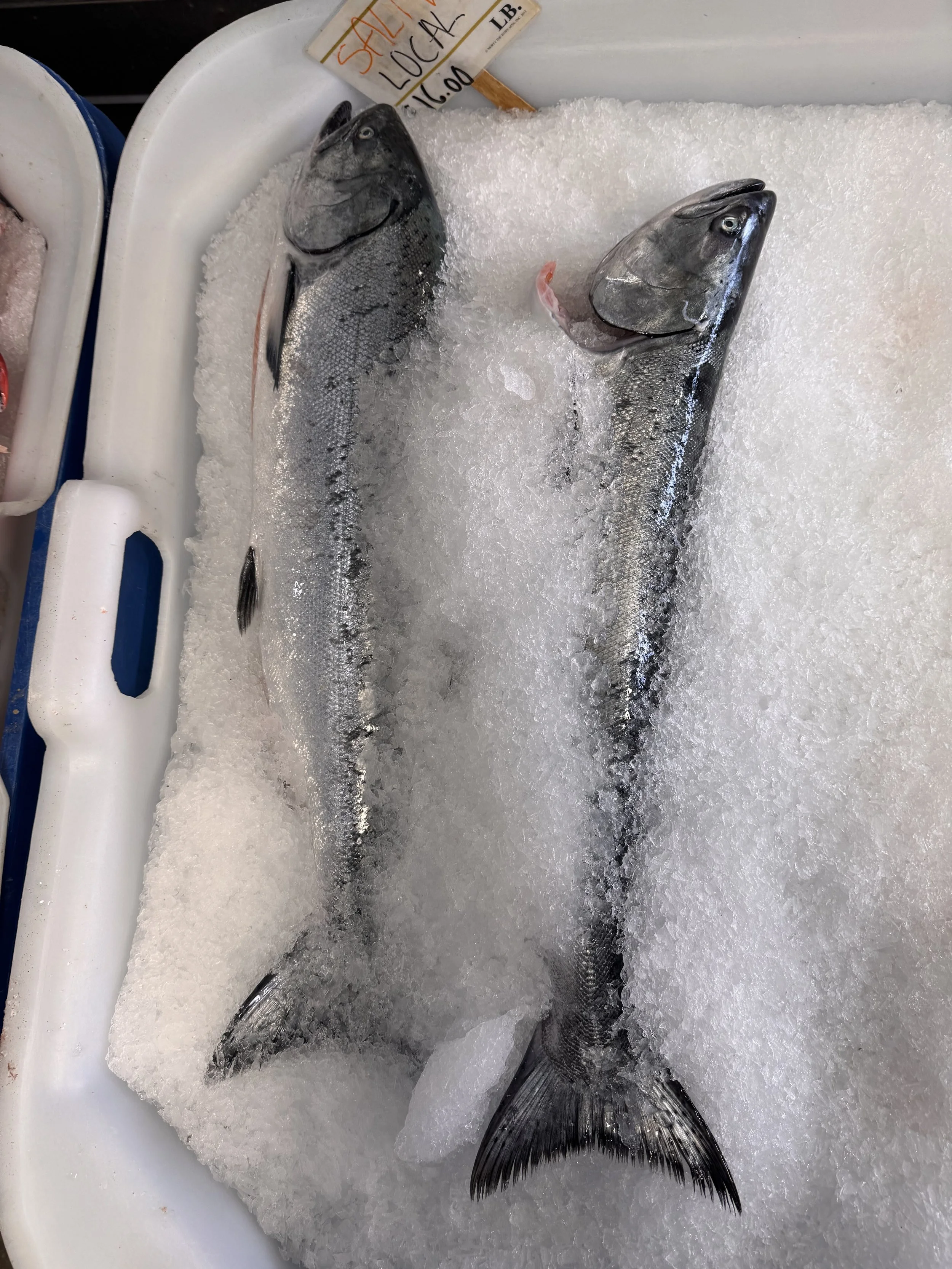
Opening commercial weekend followed a similar script as did the sport sessions that preceded it, one of joyful but limited resuscitation.
Yi describes the slowest series of long days to begin that he’s seen.
“Very little fish out there and a pretty tough start to the commercial season,” he says. “Hopefully it will make a turn for the better soon, because I know all of us commercial guys and everyone involved in the salmon fishery need it.”
Joe Lucido, who sells out of Monterey, met similar results, but still reeled in enough—32 fish over a day and a half—to host a dock sale Saturday, May 2, and only turn away three would-be buyers.
He describes the response to whole Chinook salmon sales as euphoric.
“The interaction was awesome,” he says. “It was almost like a party down there.”
You can find a list of seafood suppliers, markets, restaurants, and more on our Local Catch Guide. Follow us @mbfishtrust on the socials to stay up on pop up sales.